Bee Habitat in Cyanotype
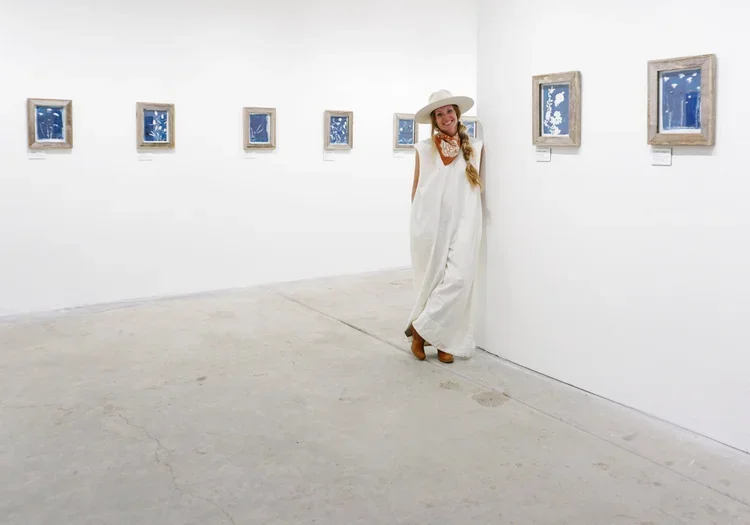
Where science becomes art. “Bee Habitat in Cyanotype” turns real bees and flowers from our research into sun-printed artworks — pressed blooms, gold-leafed wings, the art tied to the conservation project it came from through printed and virtual educational material. The work hangs in galleries, ranches, tasting rooms, and makerspaces, inviting people to see the beauty and value of a flower-filled landscape. A website built for each piece takes the public deeper — into the story of the project, the ranch or vineyard, the partnership, and the ecological and traditional knowledge behind its subjects.
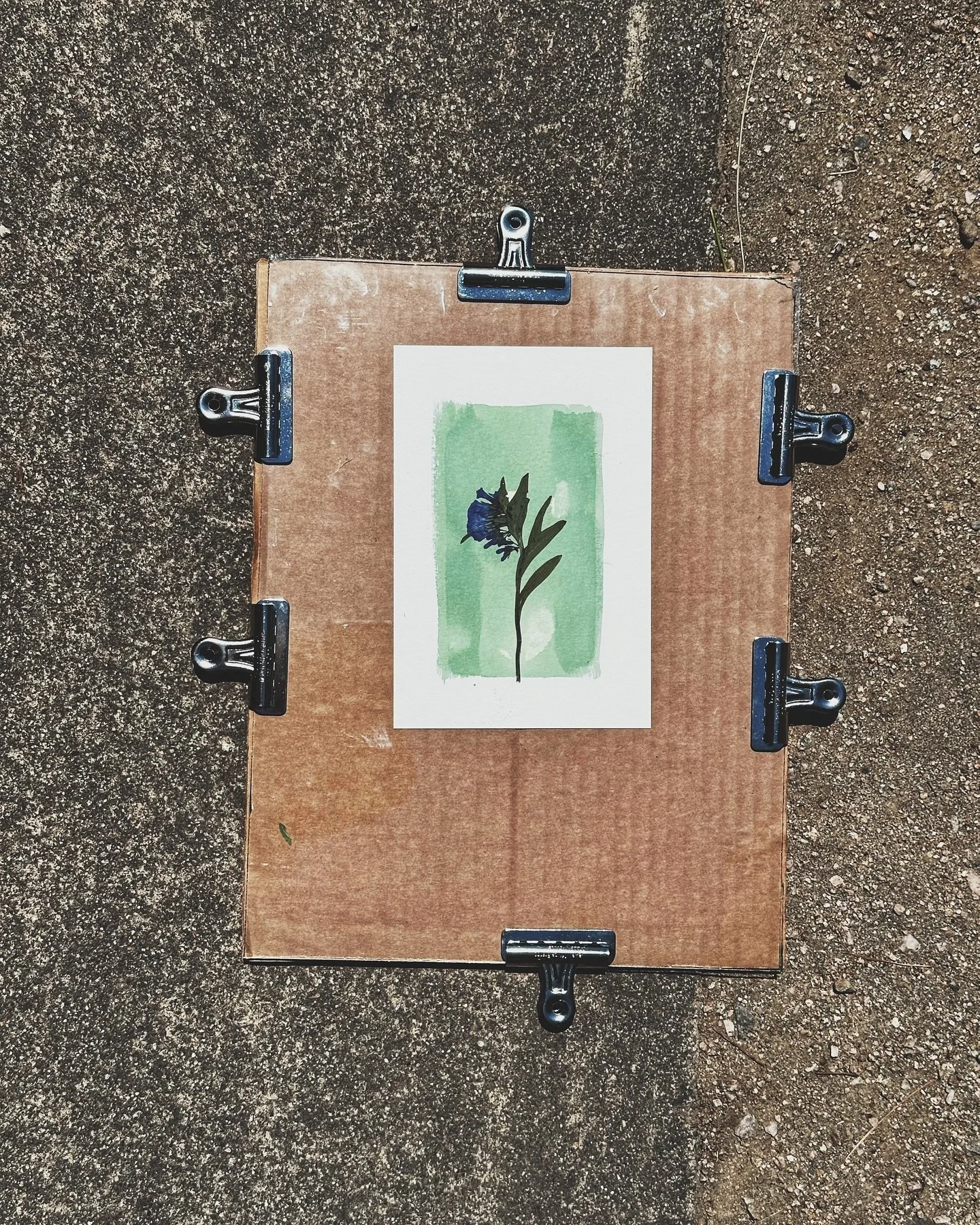
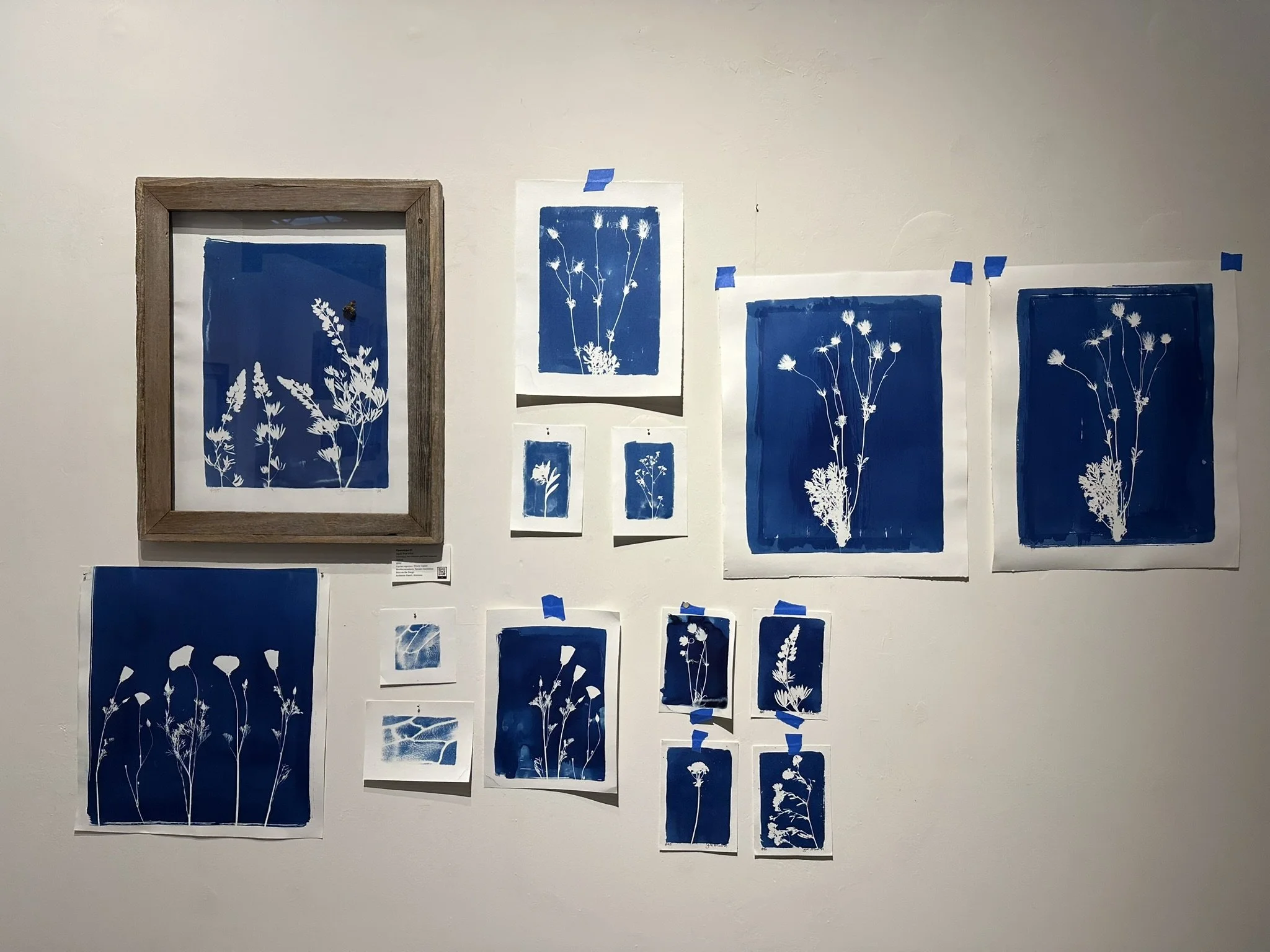
Artist Statement — Sarah Red-Laird
I'm a melittologist, artist, and conservationist. I spend the colder months near my art studio in Southern Oregon, and the field season in Montana and South Dakota — living out of a campervan that doubles as a bee lab — studying bees, bison, cattle, and the plants and soil that connect them.
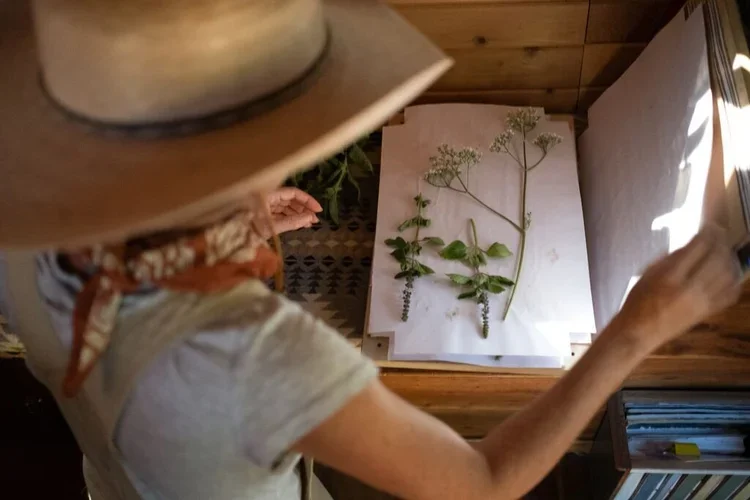
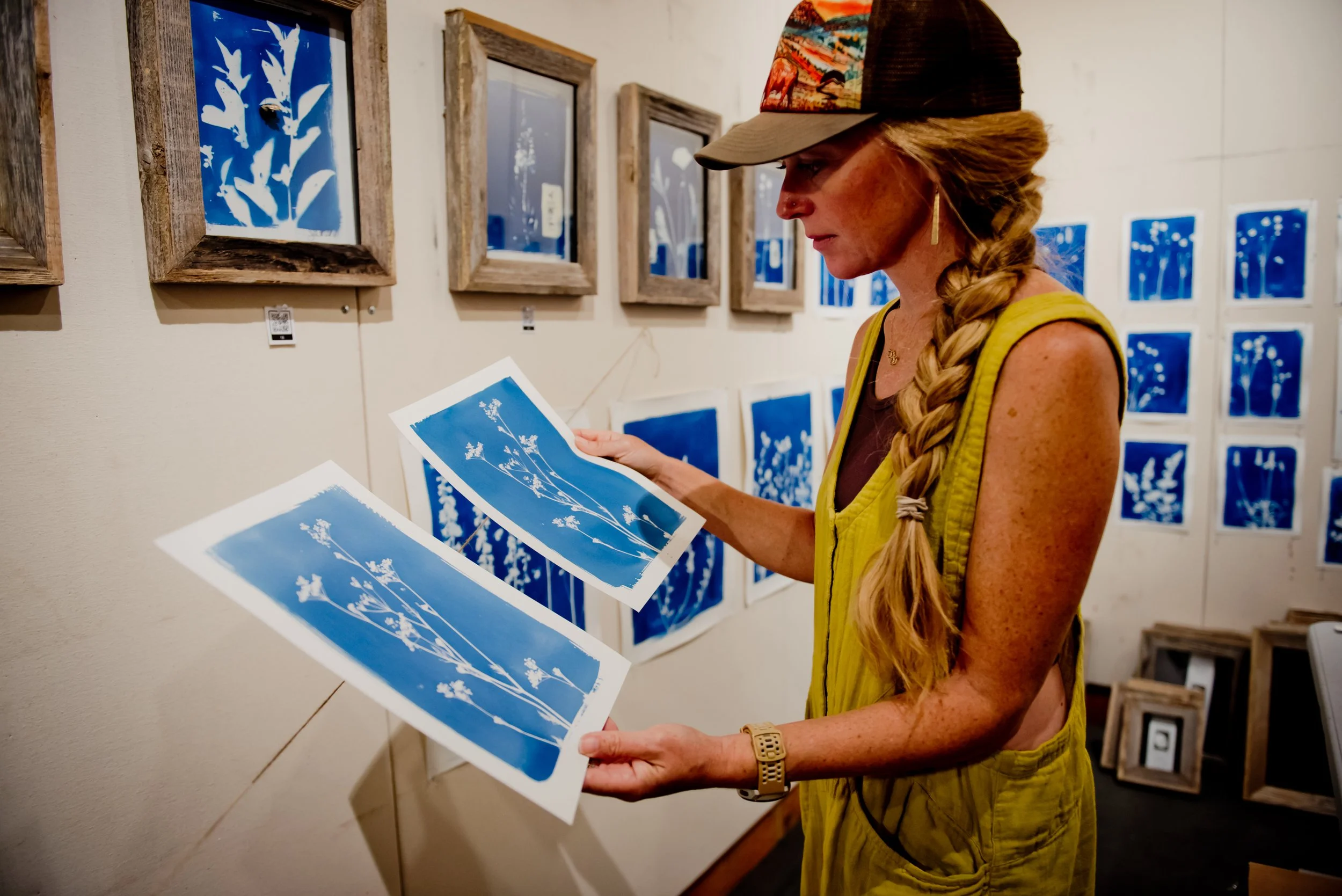
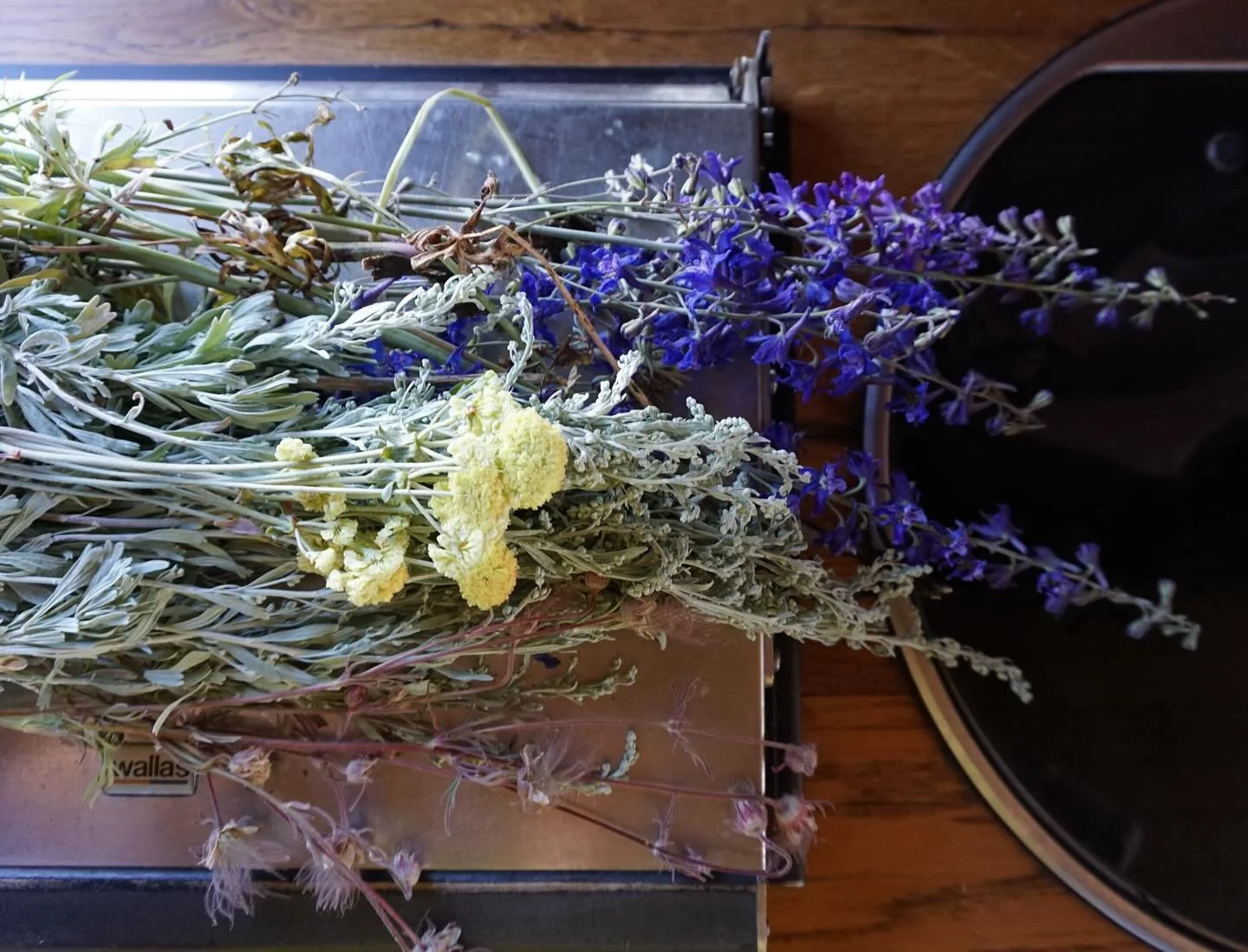
I work in cyanotype to make images of the flowers and the charismatic mega- and mini-fauna I study. I gather and press flowers from our bee habitat projects, then use them to make cyanotypes — photographic prints developed by the sun. Set into reclaimed barnwood shadow boxes, these prints become the backdrop for real bees from our research collections. I gild the bees' wings with gold leaf and speckle the prints with gold “pollen.”
Our natural systems are rarely treated as valuable unless there's a commodity to extract from them — an illusion. To me, a landscape dense with flowers and bees is something else entirely: love, care, intention, and connection. Is there anything more real and valuable? The gold is my way of reconciling that illusion.
I've lived outside the bounds of convention to stay close to the natural world — where the sky is big, the water talks, the air hums, and the ground rumbles with buffalo bellows. Through this work, I hope to bring you closer to that world, too.